Relating
to One Another
Everything
positive can radiate out from an aware and caring individual. Damage and broken bonds can radiate out from
the unaware or consciously cruel individual. Relating to one another is one of the most baffling and constantly
challenging human endeavors. With daily mindfulness of the impacts we have on others, even the most conscientious
among us still falter and feel remorse. Those who are not mindful can be destructive, abusive, and do real
damage.
Stephen R. Covey describes a paradigm that he calls “The Maturity Continuum”:
"Dependence is the paradigm of 'YOU'—you take care of me; you come
through for me; you didn't come through; I blame you for the results.
Independence is the paradigm of 'I'—I
can do it; I am responsible; I am self-reliant; I can choose.
[The Ideal] Interdependence is the paradigm
of 'WE'—we can do it; we can cooperate; we can combine our talents and abilities and create something greater
together."
Imagine if we could all take full, unabashed ownership of our lives and embrace the bigger picture
of what greatness we could create within the spirit of collaboration. Imagine if we could put Stephen Covey’s
beautifully simple and effective precept into action every day within ourselves, our family, our community, our nation, and
our global world.
Here is an article with exceptional wisdom on how to achieve an enduring relationship.

Long-Term Compatibility Runs
Deep
Whether
you've used an Internet dating service like eHarmony® or not, their assertion that compatability is a multidimensional
and complex phenomenon is compelling. Take for example, their 29 Dimensions® of Compatibility model.
The categories themselves are thought-provoking:
CORE TRAITS
"Emotional Temperament"
4 dimensions: self concept, emotional status, energy (emotional, obstreperousness),
and passion (romantic)
"Social Style"
5 dimensions: character, kindness, dominance, sociability, autonomy and adaptability
"Cognitive
Mode"
4 dimensions: intellect, curiosity, humor, and artistic passion
"Physicality"
5 dimensions: energy (physical), passion (sexual), vitality and security, industry, and appearance
VITAL
ATTRIBUTES
"Relationship Skills"
3 dimensions: communication style, emotion management,
and conflict resolution
"Values and Beliefs"
5 dimensions: spirituality, family
goals, traditionalism, ambition, and alruism
"Key Experiences"
3 dimensions: family background,
family status, and education
Until recent studies and data became available, how many of us have really had
the tools to explore the full depth of compatibility?
Dualities: Do You Motivate or Undermine?
Business managers, parents, and personal partners alike have
the capability to foster ‘secure bases’ which in turn inspire others to thrive. The left column represents
attributes that result in positive impacts on those around us. The right addresses behaviors that undermine, demotivate,
and damage. In this simple list of dualities from Daniel Goleman's Social Intelligence book lies an essential
and critical truth.
Great
listener
| Blank wall
| Encourager
| Doubter
| Communicator
| Secretive
| Courageous
| Intimidating
| Sense of humor
| Bad temper
| Shows empathy
| Self-centered
| Decisive
| Indecisive
| Takes responsibility
| Blames
| Humble
| Arrogant
| Shares authority
| Mistrusts
|
Honoring Our Lovers
The commitment to hold your partner
in high respect and esteem is at the very core of a truly loving relationship. In his book entitled Why
Marriages Succeed or Fail, John Gottman, Ph.D. asserts that we must at all costs avoid the “Four Horsemen of the
Apocalypse” which are reliable indicators of impending divorce. These are criticism, contempt, defensiveness,
and stonewalling. Here's how to effectively stop them with their 'antidotes' per The Gottman Institute.
However, if shared trust, respect, joint celebration of one another, and deep caring exist—and each person possesses a strong sense of self—then many doors open up for you as a couple.
First, my mantra-like
question has always been: "If I were a man, how would I and my body want to be treated." It's quite amazing
how much of an impact that one question can have on how you interact with your lover. Of course, the same can apply
when a man asks the parallel question.
So, you can consciously choose to be a different kind of woman
or a different kind of man for your beloved. You can feel safe and free to adore and serve one another. You are
each other's king and queen. Your lover's pleasure becomes your delight. You can enjoy egoless sex. You
can banish destructive bedroom politics and pave the way for a deeper 'enter and be loved' experience.
NEW April
2013 Survey: 87% of women say that the hottest sex is when their is a deep connection with their partner.
"Important as it is to choose the right partner,
it's probably more important to BE the right partner. We focus on changing the wrong person."(1a)
Current relationship research demonstrates that individual accountability and growth
can be significant indicators of successful commitment and an enduring bond. This relates to Covey's 'Paradigm
of We' cited in the 1st section above.
It also connects with the Michelangelo Phenomenon,
a brilliant concept presented by Dr. Caryl Rusbult on how "close partners are interpersonal artists, sculpting
one another’s strengths and weaknesses so as to bring out the best in each other"(summarized
by Bruce Bower). "Such affirmation promotes trust in the partner and strengthens commitiment.
And commitment is a key predictor of relationship durability."(1b)
So it appears that the winning combination is for individuals
to do their important 'inside work', while allying with their partners to nurture their growth into the people they
dream of becoming. The focus then is less about changing someone else and more about mutual, sustained interpersonal
growth.
On a related topic, here is one of the strongest articles I've read pertaining to the DOs and DON'Ts of a healthy and committed long-term relationship.
(1a+1b) Hara Estroff Marano, The Expectations Gap, Psychology Today magazine, March/April 2010 issue, page
71. Full articles no longer available online without subscription.
A Simple & Eloquent Truth How can we hope that our children will grow
into loving, fair-minded and solid citizens, parents and spouses if our families don't provide that model from the start?
Children Learn What They Live
If children
live with criticism, they learn to condemn.
…with
hostility, they learn to fight.
…with ridicule,
they learn to feel shy.
…with shame, they learn
to feel guilty.
If children live with tolerance, they learn
to be patient.
...with encouragement, they learn confidence.
…with praise, they learn to appreciate.
…with fairness, they learn justice.
…with security, they learn to have faith.
…with approval, they learn to like themselves.
…with acceptance and friendship, they learn to find love in the world.
by Dorothy Law
Nolte
"Your
website is so inspirational, what a wonderful contribution to life!"
— Margot F., San Rafael, CA
|
Interested in our monthly News Clipping Service Subscription? Comes via email and
works out to only 25¢ per week.
 |
|
DID YOU KNOW?
* How we treat our
significant others during good times may be even more important than what we do during hard times. Enthusiastically
cheer one another on, ask questions, and pay compliments. "A couple's ability to 'capitalize', that is to celebrate
each other's positive events, predicts satisfaction better than their commiseration over negative events." — Darbe Saxbe
 * "For centuries, we've been declaring our independence. And perhaps
it's time to finally declare our INTERdependence." — Tiffany Shlain in the film "Connected"
* "What we are not aware of in ourselves, we pass on to our children." — Gabor Maté
* There's a new book entitled "Mind in the Making" which addresses the 7 essential
life skills every child needs to achieve his/her full potential: (1) focus and self-control, (2) seeing someone else's
point of view, (3) communicating, (4) making connections, (5) critical thinking, (6) taking on challenges, and (7) self-directed,
engaged learning. If you want to discover how to most effectively teach these skills to your kids.
* According to the latest Stanford research, "process based praise" of young children for
their efforts results in more resiliency and productive risk-taking later in life.
Honoring Our Children
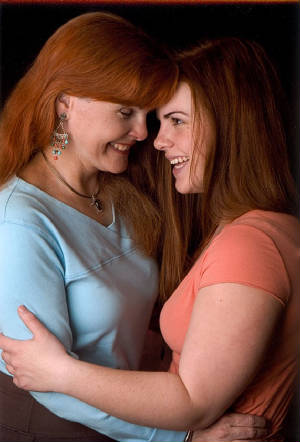
My daughter and I have a very close bond. Many
people who meet us say that they’ve not seen a mother and daughter as loving to one another as we are. Part
of the simple truth is that we consciously and heartfully committed to our relationship a long time ago, and we work at it
every day. Another aspect is that I wanted to be a different kind of parent.
Some parenting concepts that have personally
worked for us are as follows:
* Be an honest and real person to her, not some unapproachable ‘do it because I say
so’ monolith
* Let her really
know me without artifice, and for me to really know her in the same way
* Be flexible and adaptable
* Be physically and emotionally present
* Listen actively
* Be physically affectionate
*
Encourage her to be as functionally independent as she can and wants to be
* Never infantilize her
* Obliterate any double standard between her personal rights and mine
* Share engaging activities like fitness training, family
movie nights at home, and a regular girls’ dinner night out
* Make and keep agreements
* Create quiet times together to share ideas and emotions without judgment or censure
* Create a home
and a private space that is a warm, vibrant, and welcoming sanctuary for her and her friends
The following assertions beautifully sum up the core truth about enlightened parenting:
“[The] conviction
of being loved and lovable, valued and valuable as we are, regardless of what we do, is the beginning of the most fundamental
kind of self-esteem…Indeed, when core self-esteem remains low even into adulthood, no amount of external task-oriented
achievement or approval seems able to compensate. On the contrary, the needy child of the past is a kind
of emotional black hole into which external rewards disappear—which is why a lack of core self-esteem can produce totalitarian
leaders for whom no amount of power is enough, grandiose money-makers
or spenders of inherited money for whom no amount of display is enough, and authoritarian parents for whom no obedience is complete.” — Gloria Steinem (1)
So
perhaps the most important thing for Julia and me is that from the day she was born, I felt compelled to respect her as a
whole individual, with inalienable rights and unique dreams. That belief continues to manifest
itself in more and more ways as Julia, I, and our relationship grow. She is a young woman and I celebrate
that. I feel grateful and honored to be her mother. When I stumble, I apologize immediately.
I have vowed not to abuse her self-esteem, her trust, or my position as her parent. As the brilliant
filmmaker Ingmar Bergman once stated, I am fascinated by and utterly respect "the wholeness inside every human being," especially my most treasured loved ones.
Holistic relationships of all kinds are, I believe, at the core of our ability to flourish as humans. To embrace
the totality of another person—and ourselves—is to live and love most fully.
NOTE: A 2014 European study conducted across 6 countries finds that children of overbearing, strict and under-affectionate parents are more likely to derail
with excessive alcohol, smoking, and drugs. More loving, nurturing, and effective parenting styles are also discussed.
Salary.com's 2016 Mom Salary Number
The work
experts at Salary.com have defined the stay-at-home Mom's job as representing a hybrid of several different jobs. Below
is a sampling (in random order):
1. Day Care Teacher
2. Chief Executive Officer
3.
Psychologist
4. Cook
5. Housekeeper
6. Laundry Operator
7. Computer Operator
8. Facilities Manager
9.
Janitor
10. Van Driver
Based on these important tasks and the overtime necessary to do the job well, the stay-at-home
Mom's salary for 2016 was $143,102 annually.
We could even add several more tasks
to the list:
11. Spiritual Advisor
12. Bookkeeper
13. Life Coach
14. IT Manager
15. Personal
Shopper
16. Event Planner
17. Travel Agent
18. Nutritionist
19. Purchasing Manager
So the bottom
line is that whether a woman (or man) selects an outside career, the full-time parent variety, an at-home
office career, or a combination, valuable work well done deserves respect.
View the infographic now for other years of data.
Undemocratic
Family Systems — A Signpost for Other Serious Problems?
Over the past three decades, I have considered whether authoritarian, hierarchical family structures don’t
in fact signal deeper issues. Personal observations, research, and frank discussions with friends have
led me to believe that anti-democratic family systems seem to display one or more of the following:
* Unhealthy and dismissively controlling behaviors *
Lack of empathy, or underdeveloped empathy
* Racism or generalized prejudice towards certain groups (the
"others")
* Slurs and epithets used frequently
* The proclivity for 'thingifying'
others outside of the home may parallel an objectifying and one-down treatment of selected family members
The consequences of the above list during the arc of a family’s
lifetime can run deep and be quite devastating. It is vital that we as parents carefully and empathetically consider
the family 'culture' we are creating. After all, families can be viewed as an important barometer and microcosm of
our society.
If you care to share your thoughts on this topic or any other on the website, simply use the
form on the Contact page.
Read a sample description of a family culture now.
One final thought: "Ignoring a problem or situation is always
the easiest thing to do in the short-term but it seldom works in the long-term because family issues don't just go away.
They lie in wait (under the carpet, where you've swept them), ready to come back — usually when you least expect it."
— Amy Dickinson, Chicago Tribune, 7/3/2012
(1) Gloria Steinem, Revolution from Within, Boston: Little Brown & Company, 1993, pages 66 &
67.
|