"It's Never Too Late to
Become What You Might Have Been."(1)
Within the full arc of one's life, the potential for profound
growth is always there, rising up to be mined. Here's to opening new doors of opportunity and attaining new heights of contentment.
(1) Tagline for the movie "Away from Her"
Gratitude
as a Key to Happiness
“Gratitude is not only the greatest of virtues, but the parent
of all the others”. — Cicero, 106-143 B.C.
When I have gratitude towards someone, I feel humility, respect, an open heart, and understand a fuller meaning of that
person and their gesture. It would not have occurred had the individual not valued me and cared about me.
I appreciate his/her generosity and have the urge to reciprocate, and to perpetuate the circle of kindness. When I feel grateful
for an inanimate object like my house, it transforms from merely a structure into an almost organic entity
that protects and nourishes all who live in it.
With these examples in mind, the following
excerpt has proven delightfully true for me and other loved ones in my life:
“Feeling thankful is one key to happiness…A conscious focus on gratitude may also remind
you of unassuming pluses that get lost in the ups and downs of a busy life…Grateful reflection helps you pick out and
savor the good in life, even if the good isn't flashy…What's more, gratitude turns your attention to what you do have
instead of what you don't…Consistently ungrateful people tend to think that material goods, such as a big-screen TV,
or winning the lottery will make them happy. On the other hand, people who recognize the blessings they have tend to think
they'll get happiness from things like fulfilling relationships—which, research shows, are the real sources of satisfaction.
Because grateful people don't fixate on money or material goods, they may cut back on envy and nagging comparisons with the
Joneses…Call it corny, but gratitude just may be the glue that holds society together.” (2)
I once saw a poignant documentary entitled Born Into Brothels about seven children living in
the red light district of Calcutta, India. There was one scene where a small, thin girl was crouched in
a dimly lit, dank room washing tin bowls with scarce and dirty water. I have never forgotten that image,
so much so that each time I wash our dishes with plentiful, clear water from our faucet, I experience a moment of gratitude
and happiness.
Moreover, I have always strongly believed that we are able to consciously choose to be
happy. This choice does not come from selfishness or narcissism. On the contrary, our
self-awareness and self-nurturing ultimately enable us to contribute more to those around us and the world at large.
In fact, well-respected trainers and speakers Rick Foster and Greg Hicks assert that there are nine choices
happy people consistently make in their lives which reliably result in them achieving and maintaining “a profound,
enduring feeling of contentment, capability, and centeredness—the 3 Cs.” These are Intention,
Accountability, Identification, Centrality, Recasting, Options, Appreciation, Giving, and Truthfulness.
So how
can happiness sustain in the face of extreme challenges or tragedy? Foster and Hicks provide clarifying
insight:“There’s no way around the fact that life brings pain…Happy people universally react to pain
in the same way. We call it RECASTING…First happy people dive into negative feelings
head on and experience them deeply…They don’t censor raw emotions, deny feelings or run from pain as many of
us do to ‘just go on.’…Once they are fully engaged with their emotions they move into the second phase.
They begin to transform their feelings with new actions and insights. What lessons can
they learn? What new meaning can they create in their lives? What opportunities for
the future can they create from this experience? They search for the seeds of growth and insight.”
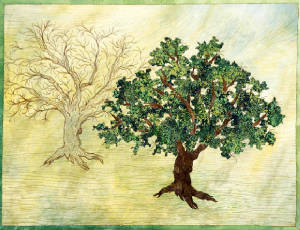
My writing of this book is a direct outgrowth of the
suicide of a loved one, and my dedication to engendering positivity over negativity, knowledge over fear, creation over destruction.
LIFE.
(2) Lauren Aaronson, "Make a
Gratitude Adjustment" article featured on the Psychology Today website.
Positive Emotional Consistency
When we buy a car, reliability and safety are often amongst the most prized
attributes. When we regularly go to a special restaurant, we hope—nay, expect—that our favorite dish will
always be as succulent as the first time we delighted in it.
Why then are we not as exacting about
our own emotional consistency with one another? Most of us have surely experienced the now you see me now you don't
mercurial personality, someone who is virtually impossible to count on. Or the even more dangerous now I love you now
I'm angry and judgmental personality that renders everyone dazed and appalled.
A viable assertion, then,
is that without emotional consistency, relationships struggle while teetering on a foundation of quicksand. The
results can include confusion, hurt, insecurity, resentment, anger, and even emotional shutdown. However, our own 'reliability
factor' can be a daily practice that will come more easily and organically over time, and will hopefully engender
consistency from those around us. Relationship quicksand can transform into stable bedrock. What is a Culture Without Character?
News stories that depict a breakdown in the daily practice of good character reside every way
we turn. It seems that many of us have abandoned fundamental tenets of civilized life. The
organization CHARACTER COUNTS! is conducting an educational program to once again raise the tragically
sinking bar of civility. Ultimately though, the primary accountability lies with us as parents and our families
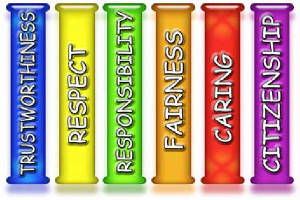
to manifest The Six Pillars of Character.
Discover
how "mindset" traits that are part of
your character are more important than your skill set in getting and keeping a job.
Are you a highly principled "Cultural Creative"? If you embody 10
or more of the following characteristics, the answer is yes.
Strategic
Self-Inquiry Can Result in Personal Growth
Here are 7 key questions you can ask yourself on a regular basis.
Your honest answers will be revealing and can motivate you to make important, life-enhancing shifts:
* How adept am I at self-soothing?
* Do I feel my partner's efforts are never good enough? This could either
be a case of that person legitimately not living up to his/her potential in our relationship, or that my expectations
are too high and need to be readjusted. The readjustment process can be very liberating and exciting for both of you.
* Do I need to more realistically manage my expectations about people,
taking into account their other obligations and time constraints?
* Do I have a double
standard and hold others to a higher standard of behavior than I do myself?
*
On a daily basis, do I feel genuine gratitude for all that I DO have, versus what I am temporarily deprived of? Am I
able to sublimate short-term discomfort for long-term goals and gains?
* Am I striving
to be as emotionally consistent with my loved ones and friends as possible? Being consistent engenders trust and deepens
bonds. Can the people I care about feel confident about which ‘me’ they will encounter
from moment to moment, day to day?
* Do I have a strong enough core self
to weather life's storms? If not, believe that I can strengthen my emotional and psychological
core much like my physical core. It takes commitment and daily practice, but the rewards are viable and enormous.

Re-Thinking
How We Present Ourselves to the World
What if one's ugly thoughts or cruel acts were reflected on one's face,
for all the world to see? That is the compelling question in The Picture of Dorian Gray, the deeply insightful
1890 novel by Oscar Wilde, and the 2009 U.K. film entitled Dorian Gray.
If we have a pleasing
exterior, do we strive to match that with the quality of our inner spirit and soul? What you see is what you get.
Or do we distort our reality and manipulate those around us with superficial outer charm?
Although we in the real world escape the gothic horror-like
fate of Dorian Gray, it is inevitable that scowls, if frequent enough, will eventually etch themselves upon our
faces for all to witness. However, it is also true that we have the power to change that at any moment any day
with a more open heart and mind.
 |
|
DID YOU KNOW?
* There is a book and film entitled Wisdom that explore the greatest gift one generation can give to another.
 *
"What's the last gift you're going to give your family? In a sense, it's knowing how to die."
— Dennis McCullough. Fascinating article about 'graceful exits'
.
* There is an amazingly inspiring story about perseverance and overcoming obstacles.
Plus the story of JR Martinez, an Iraq war veteran burned over 40% of his body, going
on to act, become a motivational speaker, and to dance...magnificently.
* "Free will is a gift you'll never know how to use until you fight for it."
— From the last scene of the 2011 film The Adjustment Bureau
* There
is an insightful article about the link between happiness
and a spiritual core, and why some people actually choose to be unhappy.
* Stephen
R. Covey asserts that "Nature teaches the inescapable law of the harvest. All lasting results are produced in a
sequence, are governed by principles and are grown from the inside out...The same is true of human nature. There is
a 'law of the harvest' that governs human character, human greatness and all human relationships. And it stands in sharp
contrast to our culture of quick-fix, victimism and blame." — From The 8th Habit, page
49.
* "People with a winning blend of perspectives have hope for
the future, feel securely rooted in the past, and are energetic and joyful about being alive in the present." —
Carlin Flora
Mindful Graciousness
& Courtesy
I believe that positive emotion and spirit can imbue all of our daily interactions. Yet it takes a highly conscious
and conscientious mindset to live a gracious, courteous life. It is something one has to commit to, and something that
is enhanced as you become increasingly aware of your impacts on others. Really, the small gestures do make a difference, carefully considering what causes
someone else to be happy or more comfortable. It is also about respect for others and honoring their value. But
perhaps at the core of it for me is having an open heart for other people.
A handful
of personal examples follow:
* Fulfilling the ritual every morning of having tea and coffee ready for my
partner and myself, with soft lights and jazz music in the living room conducive to quiet conversation
* Making
sure my stepson is sitting at the second head position of the table across from his father
* Respecting
my daughter’s right to have a sacrosanct private space in our home
* Consistently and genuinely asking for the opinions
and input of the young people in our home
Stephen R. Covey sums it up effectively:
“With people, little things are the big
things…Small courtesies and kindnesses given consistently yield huge dividends. This is the realm
of EQ (emotional intelligence)…Genuine kindness, courtesy and respect come from a deep character reservoir
of SQ (spiritual intelligence) and even obviate the necessity for a lot of social niceties and ceremonial-type
courtesies…Often when I speak to children at home or school, I tell them that if they will learn and use four expressions
sincerely and consistently, they can get what they want in most cases.”
One word – "Please.”
Two words – “Thank you.”
Three
words – “I love you.”
Four words – “How may I help?” (2)
(2) Stephen R. Covey,
The 8th Habit, New York: Simon & Schuster, 2004, pages 171-172.
Interfaith Harmony Is Possible
A beautiful and immensely hopeful documentary entitled
Sound of the Soul tells the story both of the religiously tolerant Moroccan city of Fez where Muslims, Christians,
and Jews live in peace, and also a manifestation of that in the form of the “Fez Festival of World Sacred Music.” Sound of the Soul demonstrates the essential connections
between all faiths. It also eloquently speaks to the necessity that we cultivate our hearts and spirituality
so that humanity can survive and thrive.
Explore several
religions on an interfaith web portal. :
How to Achieve Enduring Happiness by Healing "Spiritual Deficiency Syndrome"
There is much to be learned about
nourishing the spirit from many religious traditions. What follows is a beautiful thesis by Abraham J. Twerski that
could clarify this universal quest for anyone. "The cause of enduring
unhappiness is neglect of the human spirit. It can be alleviated by administering essential spiritual nutrients."
Twerski goes on to outline
11 key attributes/abilities that, when combined, are the sum total of what constitutes the human spirit, and will result in
greater happiness. The eleven are: Self-awareness, Humility, Choice,
Patience, Making the most of our circumstances, Improvement, Compassion,
Perspective, Purpose, Truth, and Change.
| Mindfulness = Presence of Heart |

|
Nourishing Your Spirit Amongst Wildlife
& Currents
One of our
most favorite weekend activities is to go kayaking in a double sit-on-top in Richardson Bay just off Sausalito near
San Francisco. Especially when the water is glassy calm like liquid mercury and swelling up to meet the boat, we feel
peacefully at one with Nature. Many times, the seals, seagulls, pelicans, and cormorants are all out in an exquisite
display of interspecies harmony. Then, there is a point in every paddle as we're floating between air and water
currents when our minds elevate to a sensation of deep calm and joy. Truly, there's nothing like it.
Even windier, choppy water days provide an invigorating glad-to-be-alive outing.
If you live in or are visiting
the Bay Area, "Sea Trek" of Sausalito offers great deals on kayak
rentals.

|
| Houseboat with birds |

|
| Seagull & seal |
Interested in our monthly News Clipping Service Subscription? Comes via email and works out to
only 25¢ per week.
|